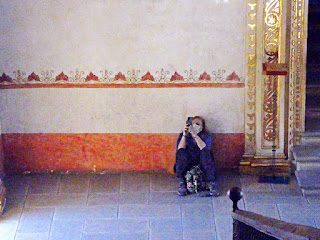
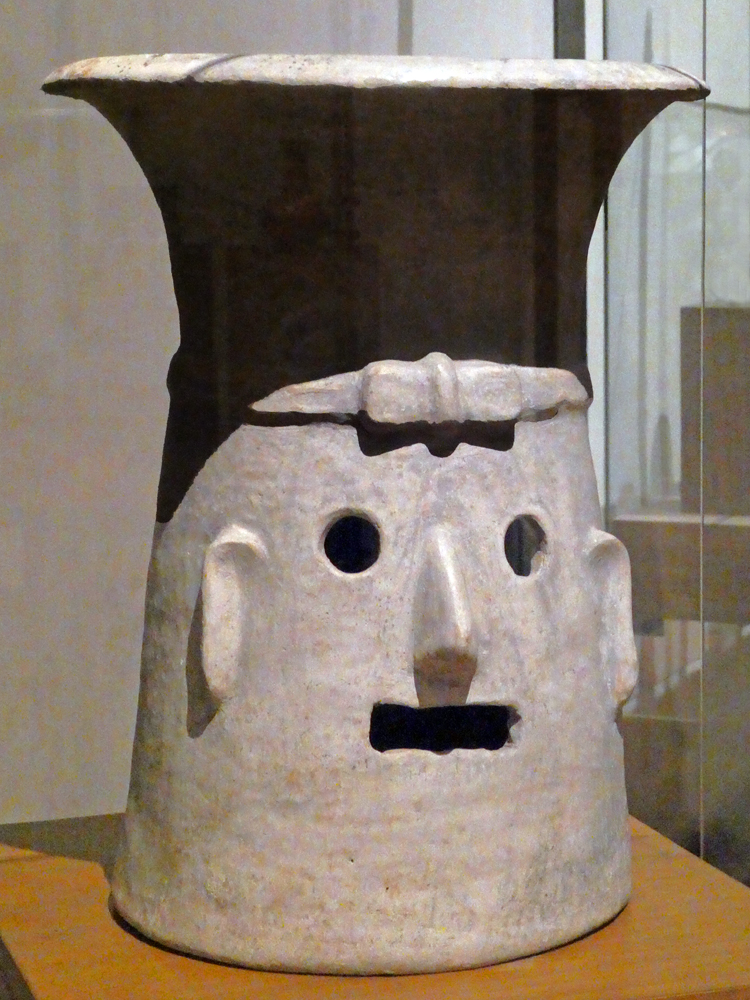
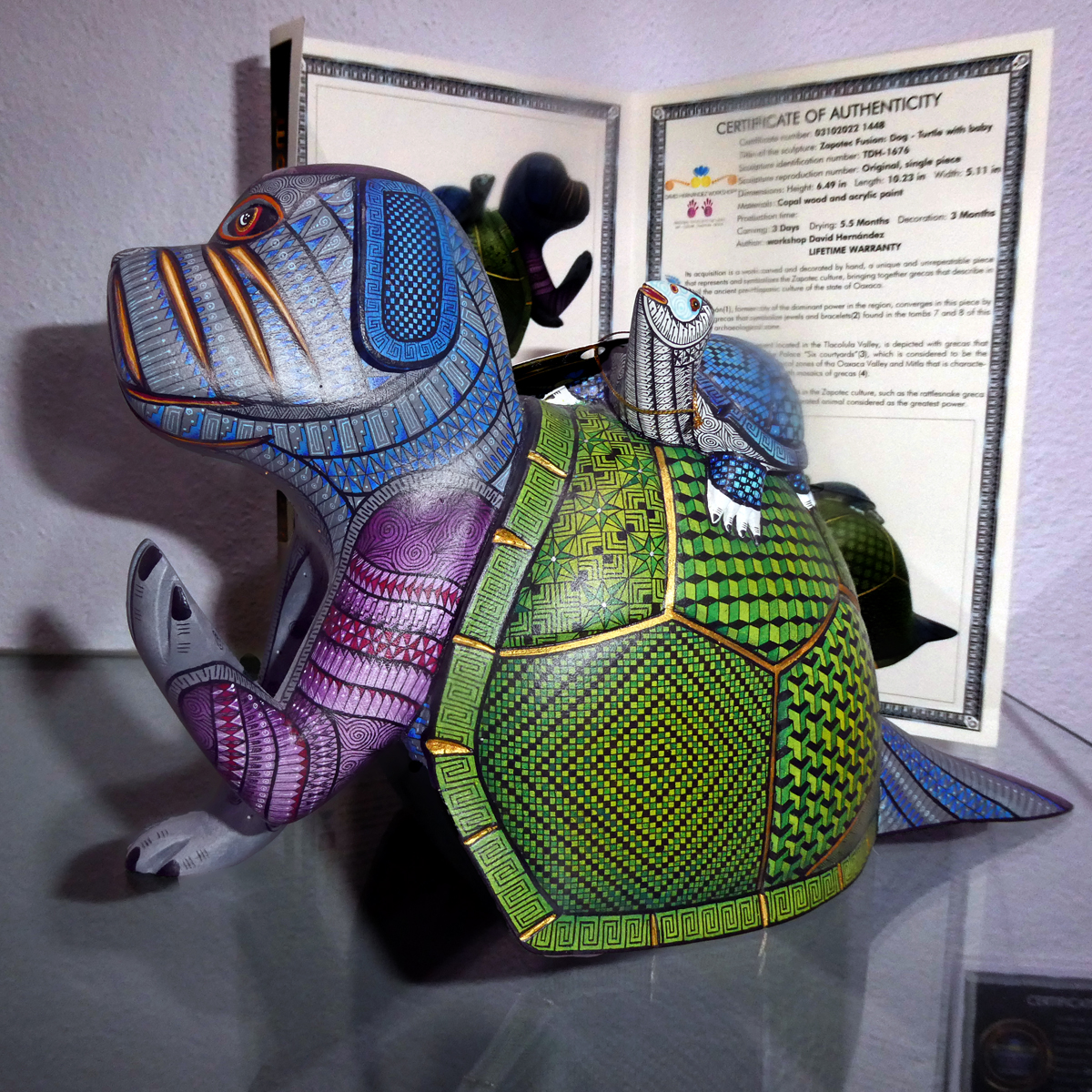
Thursday, May 09, 2013

Ivy 200?-2013

Ivy, our tuxedo cat, passed away this morning.


Ivy's full name was Miss Ivy Turnstiles Smith-Perkette, a name which requires some explanation.


We named her after Ivy Smith a character in the Bernstein-Comden/Green musical On the Town.  The town, of course, is New York City in 1944.  During the musical Ivy Smith is crowned "Miss Turnstiles":
Miss Turnstiles for June!Every month, some lucky little New York miss is chosen
Miss Turnstiles for the month. She's got to be beautiful,
she's got to be just an average girl, and most important
of all she's got to ride the subway.
There are 5,683 women who ride the subway every day. And
which fortunate lassie will be chosen for the signal honor this month?
She's beautiful, brilliant, average, a typical New Yorker... 

Perkette?  We had another tuxedo cat just before we got Ivy in July 2005.  His name was Perky.  For a while we couldn't keep ourselves from calling Ivy by the name Perky because they looked so much alike.  We figured that the two of them must have been married in some previous life, or something, and we added the feminine form of Perky to her handle.  Don't worry, it doesn't need to make any sense.  Once we changed her name, of course, we never accidentally called her Perky again.


While Ivy may not have been particularly beautiful or brilliant, she certainly wasn't average, especially in the medical sense.  Outwardly you could tell she was different because of her extra toe on each forepaw.  The term for this is polydactylic.  


There was more unusual about her than just extra toes.  Although Ivy had been spayed not once but twice, she never stopped going into heat.  Fortunately the frequency of her noisy episodes asking for a mate became less as she got older.  Since she obviously had some ovaries inside even after two attempts to remove them, we guessed that her other internal organs must be abnormal as well.  The vet diagnosed her final disease as congestive heart failure.


Ivy had been a stray, living near the home of our friends Dan and Lynn, who asked us to take her in.   I doubt she would have survived too long on the street fending for herself.   Here's Leslie holding Ivy just after she came to live with us.


While we never solved some of her behavior problems that drove us up a wall, Miss Ivy was a sweet and friendly little critter with magnificent whiskers.  She made a good bed cat.  We are happy that we could give her a home for almost eight years.  During that time she became an essential part of our menagerie.  We will miss her.

This final picture was taken less than a month ago.


 Click on the pictures for enlargements.  There have been plenty of other Mixed Meters posts about our cats over the years.  That's one of the essential reasons to have a blog.

This post also tells Ivy's story, in the comments.

A picture of Ivy in a drawer is here.

See Ivy's best whisker photo and listen to a piece of music called "In a Pissy Mood" here.

Or maybe this post has Ivy's best whisker photo.

 .  


Miss Ivy Tags: . . .

Tuesday, April 30, 2013

Not A Happy Camper

Here are four things I guess you need to know about my piece entitled Not A Happy Camper.  Or not.

1) The title is misleading. Any notion of sadness or self-pity or uncomfortable overnight woodland sleepovers, things you might rationally expect from music entitled Not A Happy Camper, are totally missing from the music.  I chose the title the first time I saved the computer file.  That was way back, last December.  I must have had my reasons for calling it that - although I no longer can remember them.  It's possible I was in fact not a happy camper for some reason.  I certainly have been N.A.H.C. on occasion since, like when I lost all the hearing in my left ear (which is mostly back now).

Anyway - in December I wrote about three minutes of music and then I stopped.  Recently I decided to finish the piece.  No better title has suggested itself.  Or maybe I didn't bother to think about it enough.  And besides, there is a sort of tradition here at Mixed Meters of sticking with the original title/filename no matter what  happens (although usually that trick only applies to much shorter pieces).


2) After about two minutes the music is high-jacked by a famous 19th-Century French Spanish orchestral warhorse.   Everything starts off innocently enough, a cheap minimalist run-on sixteenth note feel - the kind of thing computers do really well but human performers can't keep up with.  Then all of a sudden, more or less, it veers into far left field with quote after quote from that famous piece, a wildly inappropriate sequitur to what I'd already written.

Some of you might recognize the high-jack music as a staple of symphonic pops concerts of your youth.  For the rest of you, not knowing what it is won't really matter much.   I will say that this: although most of 19th-century musical repertoire bores me to tears these days this particular piece still holds an ember of my interest.  There's a certain mysterious aura thanks to metrical ambiguity and surprising interruptions of the melodic flow.

3)  A wah-wah tuba often sounds like a bassoon.  I've used the same effect in other recent pieces, such as this one or this other one.  Basically, the sound of a tuba, as generated inside my computer (by a program called a sampler) is funneled through a band pass filter, which modifies the timbre of the sound.  Technical terms.  The filter is controlled directly from the music notation using MIDI commands.

Electric guitars are famous for having wah-wah sounds, often controlled by a foot pedal.  Unlike an electric guitar  you couldn't have an effective real-life wah-wah tuba because there's no way to suppress the actual acoustic sound of the instrument.  With a computer such bizarre things become possible.  You can decide for yourself if they're desirable.

4).  Not A Happy Camper is not my wackiest piece ever.  In my opinion that honor still belongs with this particular craziness.  Other nominees up for the award are here or there.   "There" has an even whackier sequel.

Click here to hear Not A Happy Camper, © 2013 by David Ocker - 413 seconds.


Not A Happy Tagger: . . . . . .

Monday, April 15, 2013

Worst Sounding Clarinet Playing Ever

Long ago, SO long ago that I don't remember when or where it happened, someone told me that the most important thing about getting my music or performances reviewed was not whether the comments were good or bad, but whether my name was spelled correctly.

For twenty years I was a freelance clarinetist around Los Angeles, mostly playing chamber music and creative music gigs (meaning my own recitals and improvisations.)  Contractors in Los Angeles all seemed to agree that I was not the sort of player they wanted in their orchestras or studio sessions.  Their logic was sound.  I was more interested in the creative aspects of my instrument than in the re-creative.  The reviews I did get were usually positive and my name was always spelled properly.


The highpoint of my career as a clarinetist, as many readers of Mixed Meters will know, was playing Frank Zappa's Mo 'n Herb's Vacation with the London Symphony Orchestra.

Early in the 1990s it dawned on me that I wasn't getting much pleasure from the keyed beast any longer and it certainly wasn't contributing to my income.  I decided to give up playing the clarinet.  I've never regretted the decision.

The last time I played the clarinet in public was nineteen years ago today - April 15, 1994. when Xtet, the flexible chamber ensemble which I helped found, performed a South Bay Chamber Music Society concert at Harbor College.  The last piece on the program, hence the last piece I ever performed, was Aaron Copland's Sextet.  (Full program is here, scroll down.)


In spite of nearly two decades of being a "former" clarinetist, it's not uncommon for me to meet people who think I still play.  It's happened twice this month already.  Last fall a well-known musician of my acquaintance reminded me of a concert he had conducted in the early 80s for which I was NOT hired to play the bass clarinet although I apparently had been requested.  He told me that the performance back then would have been better had I been performing.  I scratched my head wondering why anyone would remember a detail like that after half a lifetime.

Anyway, this post is really about Mo 'n Herb's Vacation.  It's not Frank's greatest piece of music by far.  It isn't really a clarinet concerto and has never been advertised as one.  It simply has several sections of blindingly difficult music for the first clarinetist.  And there is also blindingly difficult music for the other three clarinetists - just not quite so much.   Frank was never terribly happy with the LSO recordings and he spent lots of time trying to fix them.  I doubt he improved them much.

Here's a recording which someone posted to YouTube, not of a performance but of a test recording done in Frank's studio before the London concert and recordings.  All four clarinets are me.  The bassoons are performed by John Steinmetz and Chad Wackerman is the drummer.


It was my impression that I was the only clarinetist who had ever performed this music.  But yesterday I learned that there had been another performance in 2005 in Venice Italy.  I'm anxious to hear that recording.

As I perused the web for information about this other Mo 'n Herb, I came across a 2007 discussion of the piece on Sherman Friedland's Clarinet Corner blog.  I had never heard of Sherman Friedland.  Apparently he was a clarinetist and pedagogue and professor at Concordia College in Canada, now retired to a life of blogging.

Sherman starts by saying some negative things about Frank and his music.  But at the end of the post he gets around to me.  Wow!
Of the work for solo clarinet and orchestra, called “MOE [sic] n Herbs Vacation” and played by David Ocker, solo clarinet, I can only say that is is the worst sounding clarinet playing I have ever witnessed, not being able to say “heard”.
So, to the young person who wrote and asked me what I think, I can only reply “very sadly”.
I wonder what an English teacher would think of Sherman's syntax.  How does one "witness" a piece of music without hearing it?  Fuzzy grammar or not, it's clear what he thinks.

This guy has a lifetime of clarinet experience.  For him to say that my playing is "the worst sounding clarinet playing" he ever heard is certainly intended as a major put down.  Since I played Frank's music accurately, we can assume that Sherman's complaints are about something else, my tone or my style or my enthusiasm or about some other subjective issue of how he thinks the clarinet is supposed to sound.

On that level I can take some pride in Sherm's defamation.  At a certain point in my clarinet studies I made the conscious decision that I would not imitate conventional clarinet playing, meaning the standard, omnipresent, wimpy, unadventurous, never-use-vibrato playing style produced by so many classical clarinetists.  Colleges and clarinet teachers, such as Sherman, must still be turning those clones out in exceedingly large numbers.  All of them hoping, no doubt, to score an orchestra job.  Any of them interchangeable with the others.  None of them the slightest bit distinguishable by their sound.

I listened to samples of Sherman's own playing on the web.  He seems to fit the mold himself.  I also found a short New York Times review of his recital at Carnegie Recital Hall in 1986.
Mr. Friedland is a competent player and seemed sincerely in love with his material. Still, one could have wished for a sharper technical edge in the Bernstein and the fulsome tone that might have invested Berg and Reger with more vivid colors.
Sherman would have gotten more notoriety from his performance if the reviewer had said "this is the worst clarinet playing I've ever heard".  People remember when something is described as the "worst ever".  "Competent"?  Could that be another word for tepid?

When I played I tried to make the clarinet something more than mono-timbral, to play with a variety of tone colors and styles and attitudes, the very thing, the fulsome tone, which the New York Times found lacking in Sherman's recital.  I wasn't always successful in my goal of aural variety but always I gave it my best shot.  Sherman, apparently, doesn't think along those lines and disparages those who do.

Sherman's comment makes me wonder if he often blogs his mouth off without thinking, like some sort of online jerk.  Maybe.  Maybe not.  More likely he's just someone with an exceptionally well-defined unchangeable set of musical assumptions which he has trouble stretching to account for the myriad varieties of other music in this world.

All in all, I would rather not have had my playing, even a 30-year old performance, called "the worst sounding clarinet playing I have ever witnessed" by anyone.  But, considering the ivory tower source of the remark, I'm happy to wear this comment proudly.

Plus, I do thank him for spelling my name right.


Here's a picture of Sherman Friedland in March 1965, part of a group performing György Ligeti's Poème Symphonique for 100 metronomes, when he was a member of Lukas Foss's Center for Creative and Performing Arts at the State University of New York at Buffalo.   I found this in the book by Renee Levine Parker, This Life of Sounds. Evenings for New Music in Buffalo. (available as a pdf)

Other reading: Two Marks of Good Music Criticism  - a 2007 Mixed Meters article about music critics, including a full review of my New Music America recital by Mark Swed.  Here's a quote:
Ocker, as both a performer and composer, brings to music the kind of personal quality that most professional musicians have had trained out of them.
A number of my historical clarinet performances are available for listening here.

Here's a photo taken in Zappa's studio the same day the overdub recordings were made - plus discussion about whether it's a real photo or not.  (It is.)  I'm the one with both beard and clarinet, on the right.

In the Clarinet Corner blog posting, the "young person who wrote and asked me what I think" named Martin, is this person.

If you click the Xtet flyer picture, it should enlarge enough for you to read the press quotes which the ensemble received.  Xpect Xpuns.

Yeah, I'm living in the past. I can think of worse places to be.


ADDENDUM: I thank everyone for their comments.  More discussion of this topic happened on Facebook.


Worst Ever Tags: . . . . . .

Tuesday, April 09, 2013

1491

I was fascinated recently by a radio interview with author Charles C. Mann who talked about his book 1493.  It covers the social and ecological effects of the arrival of Europeans in the Western Hemisphere.

Before reading 1493 I decided it would be best to finally read Mann's earlier work 1491.  1491 is subtitled New Revelations of the Americas Before Columbus.  It turns out that the stories we were most likely taught in grade school describing how American Indians lived before Columbus "discovered" them weren't terribly accurate.   1491, published in 2005, covers a plethora of recent discoveries and theories.


Primary sources of information dating from before the first Europeans are scarce.  Some cultures had developed complex writing, like the Mayan hieroglyphs.  But most Mayan manuscripts were destroyed by the Spanish who no doubt congratulated themselves for the enlightenment of their actions.  Other pre-1492 records have survived but cannot be fully understood by modern scholars, like the Incan knotted strings called Quipu.

Then there were the very first Europeans who wrote about what they saw in the New World.   This is another source of information about conditions just before the Europeans came.  Some of these stories differed greatly from what was seen by visitors several generations later and the early descriptions came to be regarded as inaccurate or even fanciful.  At the very beginning of 1491 Mann stresses that we not make the error of assuming, because conditions are a certain way now, that they must have been just so for ever.

For example: how many people inhabited America before Columbus arrived?  Some explorers discovered vast uninhabited areas and they concluded that no one had ever lived there.  In fact the native population had changed radically because the immune Europeans unwittingly brought deadly smallpox with them.
When microbes arrived in the Western Hemisphere, [anthropologist Henry F. Dobyns] argued, they must have swept from the coastlines first visited by Europeans to inland areas populated by Indians who had never seen a white person.  Colonial writers knew that disease tilled the virgin soil of the Americas countless times in the sixteenth century.  But what they did not, could not, know is that the epidemics shot out like ghastly arrows from the limited areas they saw to every corner of the hemisphere, wreaking destruction in places that never appeared in the European historical record.  The first whites therefore would have encountered places that were already depopulated. (p.101)
Pre-Columbians left behind lots of archeological clues to their existence.  Ruins of ancient citys, often including temples and pyramids, tools, pottery and trash.  Massive earthworks in remote Bolivia that are only visible from the air.  The ability of archeologists to decode these clues have improved over the years and the theories about what they mean have changed as well.


In fact, details concerning the ins and out of academic disputes over the archeological record was one of the most surprising facets of 1491.    Mann tells these stories by introducing us to a lot of unfamiliar professorly types who, using rivers of ink, debated questions like
  • What percentage of the indigenous population were killed by smallpox?  
  • When did the earliest humans arrive from Asia and did they use stone tools?  
  • How many people lived in the Amazon basin?  
The histories of these and other subjects, as detailed by Mann, all involve the overthrow of orthodox scholarly theories in favor of newer ones based on more recent evidence.  The newer ones will, I betcha, eventually become orthodoxy themselves only to give way to improved interpretations as future generations of Indiana Joneses study the issues.

Finally, I found the information which Mann provides on the Native American's abilities to manipulate their environment the most interesting aspect of the book.  Forest management using fire, changing the course of rivers, city planning and genetic manipulation are among the technologies which improved native lives in various locations.  Here's just one example:
Using a different method, [botanists] concluded that Indians might have bred the modern peach palm by hybridizing palms from several areas, including the Peruvian Amazon.  Whatever the origin, people domesticated the species thousands of years ago and then spread it rapidly, first through Amazonia and then up into the Caribbean and Central America.  Bactris gasipaes was in Costa Rica 1,700 to 2,300 years ago and probably earlier.  By the time of Columbus, one seventeenth-century observer wrote, Native Americans valued it so highly "that only their wives and children were held in higher regard."
Unlike maize or manioc, peach palm can thrive with no human attention.  Tragically, this quality has proven to be enormously useful.  In the seventeenth and eighteenth centuries many Amazonian Indians, the Yanomamo among them, abandoned their farm villages, which had made them sitting ducks for European diseases and slave trading.  They hid out in the forest, preserving their freedom by moving from place to place; in what Balee calls "agricultural regression," these hunted peoples necessarily gave up farming and kept body and soul together by foraging.  The "Stone Age tribespeople in the Amazon wilderness" that captured so many European imaginations were in large part a European creation and a historical novelty; they survived because the "wilderness" was largely composed of their ancestors' orchards. (p331)
While there are occasional dull passages in 1491 by Charles C. Mann, for the most part it is compellingly written.  Although nominally it deals with an historical period which ended over 500 years ago, much of this information seems still relevant.  Issues about our relationship with the descendants of the indigenous Americans and also preserving the native environment, which may not be what we think it is, are clearly affected by this information.

And it would be wonderful if some of these stories filtered down into grade school American History curricula - which I suspect hasn't kept up with modern discoveries since I was a grade school student some fifty years ago.


Another Mixed Meters review of a book with a single 15th century year as its title.  1453 has nothing to do with 1491.

I took the picture of the Mayan ruins in 2004.  It is the Observatory at Chichen Itza.  Here is the picture I took of the more familiar pyramid nearby.

Here are many pictures of earthworks and other ancient sites, mostly taken from the air.

Sunday, March 31, 2013

Who Cares If You Listen

Milton Babbitt probably did care if you listened. He didn't choose the title of his famous article called "Who Cares If You Listen".  (Read it here if you care.)

I actually don't care if you listen to my music.  Go ahead listen.   Or not.  It's your choice entirely.  The music is there if you want to play it.

Caring whether you listen or not tends to make me feel bad.  I know this from experience.

It should not be surprising that feeling bad is something I try to avoid.  I write music because it makes me feel good. Why should I do anything to turn a feel-good experience into a feel-bad one?  That would be really dumb.  Spending my time writing music is dumb enough.

Click here to hear Who Cares If You Listen - © 2013 by David Ocker - 165 seconds

Who Cares If You Listen is one of those perpetual motion pieces that sound good on a computer but are really hard to perform.  There's lots of percussion.  If you DO listen you could listen for the "Who Cares If You Listen" theme.
It happens several times in the middle section.  Try singing along.

There's also a moment in Who Cares If You Listen when two mystery instruments enter very briefly.  Extra credit for the first person to identify those sounds.

Do Not Remove Tags: . . . . . .

Wednesday, March 27, 2013

Cuffus

Yesterday seemed to be a day for doses of musical academia - first when I unscrambled anagrams  using clues gleaned by skimming this post by Daniel Wolf.  Later John Steinmetz sent me an article, Terminal Prestige by Susan McClary.  I even started reading that.  I'm sure it's a fascinating article.

But then I thought it would be a better use of my time to compose some of my own music rather than try to parse other people's ivory tower prose.  So I set to work.

A couple hours later I had a new 30 Second Spot which I entitled Cuffus.  It's apparently some sort of tailoring term, unfamiliar to me, but prominently displayed in the window of a local dry cleaner on a street I walk.


Cuffus is also the name of an online dating website.  I assume, based only on their logo (handcuffs in the shape of hearts), that it is not my cup of turn-on.

Cuffus, my 30 Second Spot, is a jazzish little trio for piano, bass and drums.  Nothing deep about it.  Nothing restrictive like handcuffs.  Nothing academic.  Just a bit of enjoyable music creating for me.  I hope you like it too - not that it matters.

I'd like to thank Peter Schmid, the pianist, and his compatriots Cornel Reasoner and Luis Jolla, for rushing right over to Aphrodite Japonica Studio to record it.  Thanks guys.

Click here to hear Cuffus by David Ocker © March 26 2013 - 37 seconds


Cuffus Tags: . . . . . .

Friday, March 22, 2013

Winter 2012 from The Seasons

I have completed and posted my fifth Season, entitled Winter 2012.  This is the second Winter in the series.  The entire series, unsurprisingly, is called The Seasons.

Winter 2012 uses a twelve-tone row as melodic source material.  The row was generated in Autumn 2012, which uses a different pitch center for each of twelve weeks.  Winter 2012 has no Garbage Day Periodicity, the way some of the other Seasons have.

Click here to hear Winter 2012 by David Ocker, © David Ocker 

4121 seconds

You can read all the previous posts about each previous season.  These are moderately interesting.  They contain lengthy explanations on the twists and turns of equinoxes and solstices which are the days on which I begin composing each new seasonal piece. There are also some rants about how long time lasts.

Here's a quick explanation for the perplexed: I write one short musical bit everyday and separate them with unmusically long silences - 30 seconds or more.  The idea is to combine two or more or even all of these pieces simultaneously.

Or you could play them concurrently with other music ... any other music.  Possible results include happy happenstance, crazy coincidence and cuckoo cacophony - sometimes all at the same time.

Go ahead, try it yourself!

Click hereherehere, here and finally here (allowing time for the files to load) to get all five seasons going at once.  They will cycle nearly for ever.  Well, for a very long time - "very long" in the geological sense.  It will last much longer than the Internet.

Technical note: I've changed the players on all the Seasons playback pages to Html5.  This allows them to loop indefinitely.  If your browser can't play Html5, there's an alternate player - but it doesn't loop - so you'll have to sit at your computer clicking and clicking and clicking for the rest of eternity.

Seasonal Tags:

Wednesday, February 27, 2013

More Musical Marketing Words

As a Mixed Meters occasional feature we present pictures of musically named products and companies. Or maybe it's a bug.  Either way, if you've been waiting for another episode, wait no longer.

This time we have
  • A famous Austrian composer at the mall selling valuable things.
  • A carbonated mixture of vodka and white wine which has become a simple and unconditional fusion melody.
  • Three vegetarian combinations of a melodic nature. (It's a medley of medleys.)
  • A work of art with Japanese raw fish and rice.
  • Another work of art in financial services.  (This one must be complicated because it requires a conductor holding a baton.)
  • A studio where the conductor points to the performers just as they're supposed to start playing!!!


This is the eighth episode in the series. See all of them.

Click a picture - it should get bigger.

Term Tags: . . . . . .

Saturday, February 23, 2013

A Woman Is Not A Drum

Can you use the human body as a percussion instrument?  Sure - hit it and it will make a little sound.  The body is just a big sack of meat and fluid plus a couple air chambers for resonance.   Anyone (not just tenors as Anna Russell quipped) can have "resonance where their brains ought to be."

When it comes to slapping people it matters who you hit and how.  The act of hitting another person, especially if you're hitting a woman, can lead to unintended results. You could end up looking like a jerk.


Chapter One: Hitting Yourself

Our story starts with hambone.  That's where the performer slaps his own body, a musical style associated with black slaves in the Old South who, the story goes, were not allowed instruments lest they use them to secretly plan rebellion.  (Their masters must have feared talking drums).

Here's a video introduction to hambone:


Here's another hambone video, this one from the famous American cultural institution Hee Haw.  Here one-handed hambone is combined with an even more esoteric human-body percussion, rhythmic hand squeezing.  (The marvelous vocals are called eefin.)


Chapter Two: Hitting Other People

Now watch this video:


Three formally dressed, but shoeless, musical sadists slap a resonant masochist.   All in good fun, no doubt.

Although stylistically far removed from hambone, this video also shows the human body being used as a percussion instrument.  With obvious differences...

Most importantly, these three performers are not hitting themselves.  They are wailing on a fat man.  Let's call him Drum Man. We know this is not their first take because Drum Man's drum head (i.e. his skin) is already quite red.  And Drum Man starts the clip with a big sigh.

We can see his face the whole time.  This gives us clues to his personality.  Our hero seems to be taking his beat down with a sense of equanimity.  Or maybe it's just detachment.  "Okay," I imagine him saying "Let's get this over with."

Maybe he's got something to prove.  "Do your worst," he might say,  "I can take whatever you can give.  I'm a real man." It's like watching the losing fighter being pummeled in a boxing match.

Drum Man's eyes are fixed on the camera, on us viewers.  Maybe he's defying us.  Is he saying "Who you lookin' at?  You lookin' at me?"

Secondly, the players are getting a variety of musical sounds out of their "drum".  Hitting his belly, his arms, his back and later his (facial) cheeks create different tones.  There's enough timbral variety and humor to sustain interest for a quick minute.

I wonder if this video was made as a television commercial.  I can't find the term "Equipo Elite Mundial" online. A sporting goods company perhaps?

Try imagining variations to this video:
  • Instead of three male percussionists, how about three sexy women hitting Drum Man?
  • Imagine the three sexy female drummers hitting a large, nearly naked woman who, like Drum Man, was just standing there, taking the hits with a blank expression on her face.
  • Imagine these three male percussionists hitting the large woman instead of Drum Man.
  • Finally, what if these guys were hitting on an extremely sexy woman?  But only musically, of course.  This post IS about music.


Chapter Three: Duke Ellington's A Drum Is A Woman

Duke Ellington and Billy Strayhorn's A Drum Is A Woman is a large scale work from the late fifties - a suite of pieces that tell a story.  You could think of it as an oratorio or even a short opera.  It was used as a soundtrack for a television show and released as an album.

When I was in my twenties I first heard two songs from A Drum Is A Woman played as musical interludes in certain episodes of the BBC's Goon Show, originally broadcast in the fifties.  The singer was Ray Ellington, an English son of a Black American entertainer and a Russian Jew.  Ellington was his stage name.  He was not related to Duke.


These two songs, You Better Know It and What Else Can You Do With A Drum, stood out because they contain references to hitting women.  This struck me as strange content for a pop song.  At the time I had no idea who had written them or why.  (Another tune Ray Ellington sang, Bloodshot Eyes by Wynonie Harris, fell into the same category.)

Here are recordings of these tunes, clipped from Goon Show airchecks, plus some of the lyrics.

Ray Ellington sings You Better Know It from Duke Ellington's A Drum Is A Woman
Zajj,  darling.  We're in love, it appears.
And I surely want to thank you.
But if you get ideas
I'll surely have to spank you.
Ray Ellington sings What Else Can You Do With A Drum from Duke Ellington's A Drum Is A Woman.
There was a man who lived in Barbados
He saw a pretty woman one day
He took her home and when they got there
She turned into a drum.
It isn't civilized to beat women
No matter what they do or they say
But will somebody tell me
What else can you do with a drum?
Several tracks from Duke's original recordings of A Drum Is A Woman are available on YouTube:
It was only within the last 10 years or so that I finally heard the entire A Drum Is A Woman.  To me it still seems like a strange metaphor on which to base an extended musical work, especially one which is essentially about the history of jazz.  I suppose the Fifties were different times.

Madame Zajj is the main character ("zajj" = "jazz", get it?).  She is created out of a drum.  She changes back into a drum.  She is the drum and the drum is her.  I guess, really, she is the rhythm itself, the rhythm which drives men wild.

Her love interest in this story is named Caribee Joe.
Once there was a boy named Caribee Joe.
Spoke with the animals in their jungle slang.
His heartbeat was like bongos
And he sang every song they sang.
One day he found an elaborately fabricated drum
And when he touched it, it actually spoke to him, saying,
"I am not a drum, I am a woman.
Know me as Madame Zajj, African chantress.
I can make you rich and famous.
Together we can travel
and make beautiful rhythm for the world."
But Joe was in love with the jungle, the virgin jungle,
God-made and untouched,
and with the jungle he had to stay.
The drum beat up a storm, screeching,
"I am the one and only Madame Zajj.
But there are many Joes,
and one Joe can make rhythm as well as another."
So she hopped a trade wind
And away she went to Barbados
in search of another Joe.
Zajj appears in scene after scene.   She dances seductively at Mardi Gras.  She's a snappy dresser.  She drives a big car (one with 88 cylinders that goes 440 miles per hour - but she gets a ticket for stopping at a green light).  Later she makes an entrance from inside one of those flying saucers.

Duke's narration is sly and well modulated.  His prose often turns flowery and surreal.
And we know it is about time now for the Mississippi River
To look like a puddle of pecan blue pudding,
Pistachio and indigo, and the sun and the neon-rose lollipop
Is being drawn up over the horizon into a fizzy bunch of grape colored clouds.
Zajj turns out to be too much woman - or too much rhythm - for Joe.  After travelling to New York, where he learns about be-bop in the jazz clubs, he seems happy to return to his jungle.  There he teaches other drums to tell this story.
Ahhh Hah!  Madame Zajj.
She's from way back, as far back as way back goes.
She's been way out, as far out as far out goes.
Enjoyed triumph on triumph, as the fanciest and the most famous.
Wealth and good looks.  She has everything but Joe.
She draws on all the resources of sorcery,
Trying to steal Joe from the jungle.
Joe too has had a fair amount of success giving drums lessons.
And in the evening he sits by the fire
With his fabulous collection of drums around him.
And Joe likes to tell them about his trip to New York
And Madame Zajj's dream.
When Joe gets sleepy he takes his favorite
New shiny drum on his knee and says
"Now you tell me a story."
And the new drum clears her throat and starts to recite
"Once there was a boy named Caribee Joe.
One day he found an elaborately fabricated drum.
And when he touched it, it actually spoke to him,
Saying 'I am not a drum.  I am a woman'."
A Drum Is A Woman is really a story in which love of musical rhythm is metaphorically compared to the love for a woman.   An allegory.  Madame Zajj represents the essential rhythmic feel of jazz.  

Duke makes his essential analogy at the top.  Here are the very first lines of A Drum Is A Woman:
A drum is a woman
Who won't stay out of your blood.
A drum is a woman
It's beat is like the quickening of a heart in love.
Metaphor or not, regardless of the quality of his music, we suspect that Ellington understood that he might be misunderstood - even back in the Fifties.  I suppose that's why he feels the need to tell us "it isn't civilized to beat women".

We should already have known that.


Chapter Four: Jorge Perez Gonzalez's Bottom Percussion

If Duke Ellington's A Drum Is A Woman is a delicate dance metaphorically combining love of music with love of women, then Jorge Perez Gonzalez's recent video Bottom Percussion PATAX shows just how low the art of metaphor has fallen.

Perez lines up four pairs of hairless naked be-thonged butt cheeks, arranges them so that's all we can see and then he spanks them with his hands, synching with a (prerecorded) instrumental track.  He occasionally hits a suspended cymbal.

He tells us that this is music.  I think he needs to be told that it isn't civilized to beat women.  Or anyone.  After all, it's not the Fifties any more.


Previously JPG's most watched video had about 30,000 hits in ten months.  Bottom Percussion got hit over seven million times in just two weeks.  Since Bottom Percussion is no more interesting musically than those other tracks (actually less interesting), it's not hard to figure that this popularity results from the particular "instrument" he uses and how he plays it.

People (meaning, in this case, mostly males, according to YouTube statistics) must want to see musicians hit women.  With such a large viewership, Perez has almost certainly opened up a new You Tube revenue stream for himself.  Sequels and copycats can't be far behind.

In an attempt to excuse himself from well-deserved accusations of musical misogyny, after two weeks Perez revealed that only two of the butts were female.  The others were not female, they just appeared to be.  He released another video showing these four people standing up afterwards with blurred faces.  I guess the Butt Cheek People don't want their identities known.  Maybe they are afraid that their mothers would find out.

At least Drum Man looked us straight in the eyes. And he only got hit above the waist.

When struck, the Butt Cheek People all make pretty much the same sound.  Perez seems to carefully choose which cheek he will hit.  But maybe he's just hitting randomly.  There seems little musical point for changing cheeks.   It's easy to imagine him thinking "I enjoy spanking one butt.  Four butts will be four times more fun."

If Perez had chosen a wide variety of body sizes to beat on presumably there would be aural distinctions between them.  A butt of a morbidly obese person might serve as the "bass butt".  A little girl or boy butt might serve as the "soprano butt" (that's a disgusting thought because Perez ought to know that it isn't civilized to hit children.  He could use a petite adult instead).

Maybe Perez only knows beautiful, hairless, tight-assed people with insufficient bodily resonance.  I think it's more likely that he just likes to hit on butts.

Because Perez has posed his instruments so the camera can only see one section of their bodies and because he chose to portray them as identical and interchangeable, he can be validly accused of sexual objectification.  Male or female, he has turned people into things.  Thank goodness he only used his hands to hit them.

Watching videos of spanking turns some people on sexually.  Some like to spank, others like being spanked.  As long as the relationship is consensual there's no problem.  Bottom Percussion really should be labelled as soft porn.  Keeping music and porn as two separate categories would be the civilized thing to do.

Seven million hits can't all be wrong, can they?  Everyone is free to draw the line between music and porn where they see fit.  There are more than ten likes for every dislike.

You might want to compare Bottom Percussion with this definitely NSFW video which shows a man "performing" on a young girl's behind.   Like Bottom Percussion you can't see the spankee's face.  Unlike Bottom Percussion there is no pretense of musicality.   It really is soft porn.

Others have called for Bottom Percussion to be removed from You Tube.   That's never gonna happen.

Instead, I hope that Jorge Perez Gonzalez does many more videos and lives an extra long life - long enough to someday understand what is so objectionable about this performance.   He has sunk to great depths without even knowing he's in a hole.  Getting out of his hole is going to require an awful lot of time and effort.

Who knows - this video might make his career, lead him to fame and fortune, the way Kim Kardashian's sex tape benefitted her.

To "honor" Jorge Perez Gonzalez's musical travesty and maybe give hs career a little extra boost I've decided to dust off the long dormant Mixed Meters awards program called The Dockers.  After all, this is awards season; the Oscars are this weekend.

The envelope please.

And the Docker For Setting A New All Time Artistic Low By Pretending That A Soft Porn Video Is Really Music goes to ... Jorge Perez Gonzalez for his video Bottom Percussion.  Take a bow, Jorge.


Chapter Five: Jayne Cortez's If The Drum Is A Woman

I was happy to discover other, more civilized opinions which employ the metaphor of women and drums.

Jayne Cortez, who passed away recently, was a poet.  She performed her work with a band called The Firespitters.  Beyond her own successful career, she came of a high jazz pedigree as the mother of Denardo Coleman.  She was once married to Ornette.

Her poem If the Drum Is A Woman speaks to the issue of domestic violence against women.  The poem uses Duke's woman/drum metaphor.  This seems like an appropriate way to conclude this post.

Here's a video of Jayne Cortez reciting If the Drum Is A Woman with accompaniment by The Firespitters.  Appropriately they play a lot of drums in the background.  Read the whole poem here.  I include a short excerpt below.


If the drum is a woman
then understand your drum
your drum is not docile
your drum is not invisible
your drum is not inferior to you
your drum is a woman
so don't reject your drum
don't try to dominate your drum


It has been almost three years since I awarded the last Docker.  This is a link to all the awards.

Mixed Meters has never discussed spanking before.  But the subject of penises has come up a few times.  Some of those posts even have musical connections.

Want more eefin?  Check out this eefin post from WFMU.

Butt Tags: . . . . . . . . . . . .

Thursday, February 07, 2013

The Super Bowl Baby Trilogy - Reposted

American culture is just chock full of fun holidays which combine the celebration of competition with crass consumerism.

For example there are the Oscars (and Grammies and a slough of other pointless entertainment award shows) in which Americans are encouraged to pay their money to enjoy a blockbuster movie (or pop album or whatever) because it is on the list of industrial in-crowd-chosen nominees heavily advertised as this years "can't miss" entertainment.

Another good example of an American holday devoted to competitive consumption is Black Friday.  That's when patriotic Americans wait in line all night for the chance to elbow their fellow Americans in the gut (or pepper spray them) while sprinting through the aisles of Wal Mart (or Best Buy or K-Mart or whatever) seeking yet another deal of a lifetime on cheap mass-produced merchandise which carry generous 90-day warranties.

The best example, however, is Super Bowl Sunday.

Super Sunday celebrates competition in the form of metaphorical warfare between two football teams from cities you don't much care about who fight over symbolic territory with a weird leather ball but periodically wait around doing nothing while elaborate advertisements are shown to people on big screen TVs as they consume mass quantities of chicken wings (or pizza or beer or chips or guacamole or whatever).

Here's an article about the effects of the Super Bowl on domestic violence police calls and other health related matters.  I wonder if the sale of Alka-Seltzer spikes just after the game.  Apparently more food is consumed on Super Bowl Sunday in the U.S. than on any other day, except Thanksgiving.

Here's a helpful video for people mystified by the game of professional football.


In the past Mixed Meters has explored the Super Bowl tradition.  Most recently there was a largely unsatisfying effort to find a connection between Milton Babbitt and the Super Bowl.

Long before that, way back in the darkest Dark Age of Mixed Meters (about 2006 or so), there was the Super Bowl Baby, a trilogy of 30 Second Spots.

In those early days I was composing on a laptop at Starbucks.  You may think that a crowded noisy Starbucks was not conducive to musical composition (you'd be right) although mostly I found it easy to ignore the distractions.

But one day (January 29, 2006, a Sunday, to be precise) my local Starbucks was afflicted by a small baby, wailing with all its might, no doubt after imbibing one-too-many cups of bitter Starbucks coffee - or maybe just not happy with post-partum living.   I still managed to finish my piece (a half-minute march, inspired by John Phillip Sousa, including a trio section in the subdominant).

I decided to immortalize that damn baby in the title of my piece.

click here to hear The Crying Baby Halftime March
Copyright © January 29, 2006 (and 2013) by David Ocker - 34 seconds

The next day, Monday, I returned to the same Starbucks where I transformed The Crying Baby Halftime March into another, very different sort of music.  The baby still gets the title role:

click here to hear The Sleeping Baby Postgame Wrap-up 
Copyright © January 30, 2006 (and 2013) by David Ocker - 33 seconds

I tried the same trick yet again that Tuesday, transforming the first piece into another Thirty Second Spot.
click here to hear The Hungry Baby Pre-game Tailgate Party
Copyright © January 31, 2006 (and 2013) by David Ocker - 31 seconds

You can see that the trilogy was not composed in sequential order.  This doesn't matter much.  Heck, it doesn't matter at all.  Listen to the three spots in whatever order you want.

I'm reposting now because I've uploaded the files to a different location and added a new playback option (which uses a new computer hell called HTML5 that allows playback on my mobile Apple device).  (If you have trouble listening on your device, please let me know.)

And besides, according to Google's records, the original post has gotten only one hit in over five years.  I'm hoping to double that within the week

Baby Tags: . . . . . .

Sunday, January 27, 2013

Serious Immobilities (first post)

On the fifty-seventh anniversary of his birth, I'd like to write about Arthur Jarvinen's longest piece of music. Possibly anyone's longest piece of non-repetitive music.  It lasts one day.  The score takes up 301 pages.

The piece is entitled Serious Immobilities.  It is a huge set of variations.  It has different layers.  It has different versions.  A piece this large requires two separate posts.  Find the second one here.


To understand Serious Immobilities you must first know the work on which it is based, Vexations by Erik Satie. Vexations is a short twisted piano solo for which its composer provided this (capricious, in my opinion) instruction:
"In order to play the theme 840 times in succession, it would be advisable to prepare oneself beforehand, and in the deepest silence, by serious immobilities." 
Vexations was resurrected from obscurity and elevated to high art by composer John Cage.  It is now widely known.  Satie's instruction is interpreted to mean that the music must be repeated exactly 840 times in order to finish one entire live performance.

(Recently Mixed Meters presented this article about two early performances of Vexations here in Los Angeles.  It includes a 6-hour excerpt you could listen to.)


the cover of Serious Immobilities, 840 variations on Satie's VEXATIONS for piano solo by Arthur Jarvinen

Here's a bit of Art's own introductory program notes to Serious Immobilities:
Late in 1996 the Paris New Music Review sponsored a competition for piano solos of no more than one minute in duration.  I responded with a variation on the longest piano piece I could think of - Vexations, by Erik Satie.  ...  No sooner had I written my first variation than I realized the implication; I had to write 839 more.
Structurally the work unfolds as a sort of convoluted palindrome.  The first two hundred and ten variations form the core of the work, and can in fact be performed as a separate piece - Serious Immobilities, Part One.  Variations 211 through 420 are variations on the first two hundred ten in reverse order.  Then the entire piece retrogrades (though not very literally.)
Besides a piano and pianists, Serious Immobilities requires other equipment on occastion: an old-fashioned metronome (associated with references to composer Randy Hostetler, found in variations 33, 388, 453 and 808), a typewriter (as a rhythm instrument in variations 192, 229, 612 and 649) and a small portable cassette tape recorder (for the playback of parenthetical text in variations 686 and 704).

A number of variations have text which are spoken or sung by the performer.  Many texts were written by Erik Satie and others by Andrea Loselle, a professor of French, and by Arthur himself.  Variation 816 is entitled "A Mason Hymn" with text by H. Adamson (Perth, 1638), whoever that is.  Art tells us that these texts undergo variation much as the music does.
For variations employing my own texts I decided to treat the sentences as "language objects" for manipulation.  I tried to find the exact opposite of each individual word, and if that was too difficult, the smallest possible group of words.  This accounts for the somewhat bizarre, though still completely sensible, aspect of some of the later texts.
Some variations involve musical styles and theatrical presentation.  A lounge act with a performer who talks to the audience, a waltz to be played with Straussian feeling and a jazz pianist all appear periodically.  Improvisation, carefully restricted by the composer, is required of the pianist in spots.  Variation 19 Shadow Play carries this instruction:
This variation is to be "played" silently.  Finger the notes, but do not depress the keys.

(click any sample for a closer look)


Variation 1, that one he wrote for the one-minute music competition, is entitled Hexations.  It consists of a very slow variation of Satie's music (the tempo marking is quarter equals 13) plus a Composer's Note to be read simultaneously by the performer.

Variation 840, the final one, entitled Transvexions, has tempo indication of quarter note equals approximately six and one half beats per minute.  Art adds "Way Damn Slow!" to drive home the point.

Here's the text to Hexations:
I have thought a lot about the subject of the lengths of musical pieces, long ones in particular.
The late works of Feldman, for example, seem to me to be arbitrarily long.
As much as I admire and enjoy them, I remain unconvinced of any real reason for their extreme lengths, beyond the composer's desire to make them long.
To specify that a work for solo piano be no more than one minute in length seems equally arbitrary, especially since it can be as short as one second and still qualify.
In approaching this project I decided to base my work on the longest solo piano piece I could think of, Vexations by Erik Satie.  This is the quintessential arbitrarily long piece, requiring 840 literal repetitions of the basic material.
Vexations is composed entirely of three-note chords.  I have retained the original rhythms, but combined adjacent sonorities into hexachords, thus Hexations.  I also eliminated the repeats.
(The text from Variation 840, Transvexions, in it's linguistic palindrome, is included in the second post.)

Half of Hexations can be heard in this video:


Variation 420 (one of those in Art's palindromic structure which corresponds to Hexations) is entitled Hexplanation.  In it he reveals more about the Paris New Music Review competition.
The competition judges chose fifty winning works.  Hexations was not among them.


In an article like this it's tempting to discuss only the variations which stand out, to emphasise those that grab our attention with theatricality or other means.  It is important to remember that those moments which use text or sound effects or musical style references are really a small minority of Art's 840 variations.

The overwhelming majority of Serious Immobilities is music clearly in the spirit of its source material - simple, slow, spacey piano music.  Static music that is somehow always moving.  Variation after variation washes over us one after another - like waves, each one is slightly different, some are very different, but most are the same as the last, the same as the next.

Art takes the puzzling Vexations harmonies as a starting point for his own concerns as a composer.  He deals with pitch, tonality, consonance, dissonance, tension and release.  His compositional "games" - that's a word he himself would use - are at work throughout Serious Immobilities.  Although these processes are hard to unravel afterwards, through them we sense Art's own spirit.

Finally, after a while, it starts to dawn on us that hearing this music could be compared to the mythical act of nailing jello to a wall.  Under the assault of analysis, it will always morph in messy, unpredictable ways.  A work of this scope naturally avoids easy description.  By combining Satie with Jarvinen this effect increases exponentially.  Its very elusiveness is the attraction.

Serious Immobilities is never going to explain the conundrum which is Vexations.  I suspect Art may never have expected such an outcome.  I wonder if he himself claimed to understand the Satie better once he had finished.

What Serious Immobilities does is to take up residence inside the sound world of Vexations.  From there it takes its own sweet time to explore the strange Vexations countryside.  We can hear many unusual musical "sights" filled with exotic audio "flora" and unconventional acoustic "fauna".

Arthur Jarvinen has shown us this landscape where Satie's vision is mixed with his own.  Knowing the sources, it should come as no surprise that the final result is just as puzzling as the original.  Whereas Vexations made us scratch our heads, Serious Immobilities also makes us scratch our heads.

Jarvinen may give us a more animated and colorized experience than Satie but we are none the wiser because of it.

I'm pretty certain that was never the point.


There is more about Serious Immobilities in the second post.  You'll read about various versions and  layers (e.g. Spineless Dog).  There will be audio samples and a history of the several performances of Serious Immobilities.  Also watch for information about the 77 minute long compact disc, performed by Bryan Pezzone, available on Los Angeles River Records.   If you want that disc there's even a special Mixed Meters discount offer. So read on ...

Mixed Meters could not have produced these posts without the help of Lynn Angebranndt.  She gave me permission to post excerpts of the piece.  Thanks, Lynn.   Also major thanks to Daniel Rothman of Los Angeles River Records.

Visit Arthur Jarvinen's own website.  His music is available from the Leisure Planet.  Another epic Jarvinen work (very different than this one) is The Invisible Guy.

Mixed Meters wants to do what I can to celebrate the life and work of Arthur Jarvinen.  Here are all MM's Jarvinen posts.

840 Tags: . . . . . . . . . . . . . . .